

Summary
There are two ways to create posts using Gravity Forms. You can add “Post Fields” to the form, and a post will be created when the form is submitted. Or you can use the Advanced Post Creation Add-On and a Post Creation feed to create a post. Each of these methods allows you to set up a form that, upon submission, automatically creates a new post using the form data.
Note: When using the Advanced Post Creation Add-On, do not use Post Fields; those fields are used only when not using the Advanced Post Creation Add-On.
The official Gravity Forms Advanced Post Creation Add-On (abbreviated here as “APC”) has some useful features that are not included in the standard Post Fields, and they do function differently. APC is created in the form settings, while post fields are dragged and dropped directly on the form.
Reference Material
- Post fields documentation.
- Advanced Post Creation Add-On documentation.
Post Fields
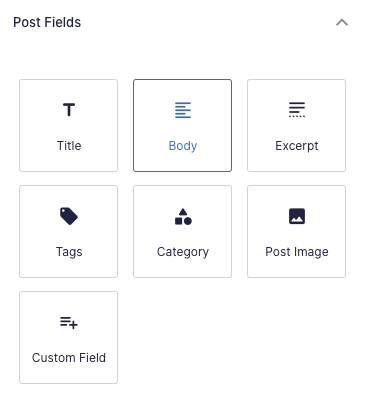
Post Fields are added to the form directly, and provide input fields for each of the major components of a post. In this way, you control the content of your post directly from the form fields themselves.
When the user submits a form that contains any post fields, a standard post will be created with content from the post fields that were included.
Advantages
- Simple to set up.
- Quickest method to create a simplistic standard post.
- Easy to manage for anyone who understands the form editor.
Advanced Post Creation
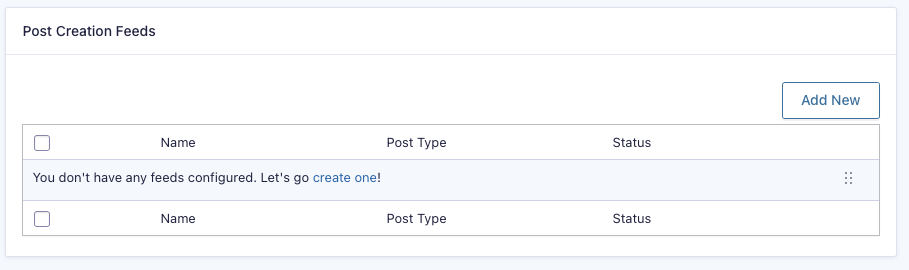
The Advanced Post Creation Add-On can utilize any fields on your form that match the required type, and the creation of the post is managed by the feed you set up from within the Form Settings → Post Creation.
Note that forms to be used to initiate Advanced Post Creation feeds cannot use the standard Post fields.
Refer to this help guide for details on creating an APC feed.

Advantages
- Can be used with an existing form, and does not require (and cannot use) Post fields.
- Has the ability to create standard and custom posts. For example: Product, Event, Team Member postings.
- Offers additional post settings.
- Allows more control over the post content, using merge tags and static text.
- Allows you to utilize conditional logic, to have branching feed choices based on form data submitted.